
Read the Lamar County Current Owner Card
Start with the Lamar County qPublic entry, the assessor's online home for parcel records. A returned-notice sample shows the county's field wording. Treat any deed detail as a pointer for a deed check rather than an official qPublic label.
| NAME | The owner name displayed in the local assessment data. |
|---|---|
| MAILADDR | The address used for owner correspondence, which may differ from the property. |
| Situs | The physical address tied to the parcel. |
| PARCEL NO | The search key used to match the assessment layer to maps and other files. |
| Current Value / Previous Value | Dated value labels that help identify the same account, not proof of ownership. |
| Latest deed reference | Book, page, filing date, grantor, and grantee confirmed in the recorded index. |
The owner of record can be one person, several parties, an estate, a trust, or a business entity. A mailing address never proves the named party lives at the situs. Before treating two same-name results as one owner, match the parcel number and the legal-description clues on both records.
Check Lamar County's Exact NAME Field
The official Lamar returned-notice data uses the literal label NAME. It also supplies Account No., MAILADDR, PARCEL NO, Digest Class, Desc, Situs, and Homestead. Those fields separate a current owner result from another parcel. The similar name can belong to a different parcel entirely. They also give you a compact checklist. You can record what the display showed and when you saw it.
The live Lamar card layout is not part of the returned-notice sample. Its refresh schedule is not either. The Georgia Department of Revenue property-record directory independently points users to county property systems. If qPublic will not open, call the Tax Assessor through the county departments directory. Ask for the roll entry by parcel number.
Note: Save the search date because Lamar County has not published a qPublic refresh interval in the sources inspected.
Separate Situs from Lamar County Owner Mail
A situs identifies the land or the improvement on it. MAILADDR shows where assessment correspondence goes. Those two addresses can differ for ordinary reasons. The owner may get mail elsewhere, use a business office, or be an estate representative. A mismatch does not mean qPublic is wrong, and neither address identifies an occupant.
- Owner of record
- The party shown on the current assessment roll, subject to the roll's date.
- Assessment roll
- The county's tax-administration record for parcels and values.
- Situs
- The physical property location used in the parcel record.
- Recording lag
- The period between a deed filing and a later assessor-display update.
For lawful property correspondence, use only the public mailing field and keep the message tied to the parcel or transaction. Every letter should reference the parcel number or deed so the recipient can match it to the owner of record. Skip anything that republishes protected or sensitive address details.
Resolve Lamar County LLC and Trust Names
When the current owner field shows an entity name, search that name exactly as it appears in the recorded deed. The Georgia Corporations Division Business Search sorts entities by control number, status, registered agent, and filing history. The form itself is public and free. A registered agent is a contact for the entity. That role alone does not make the agent the owner of its real estate.
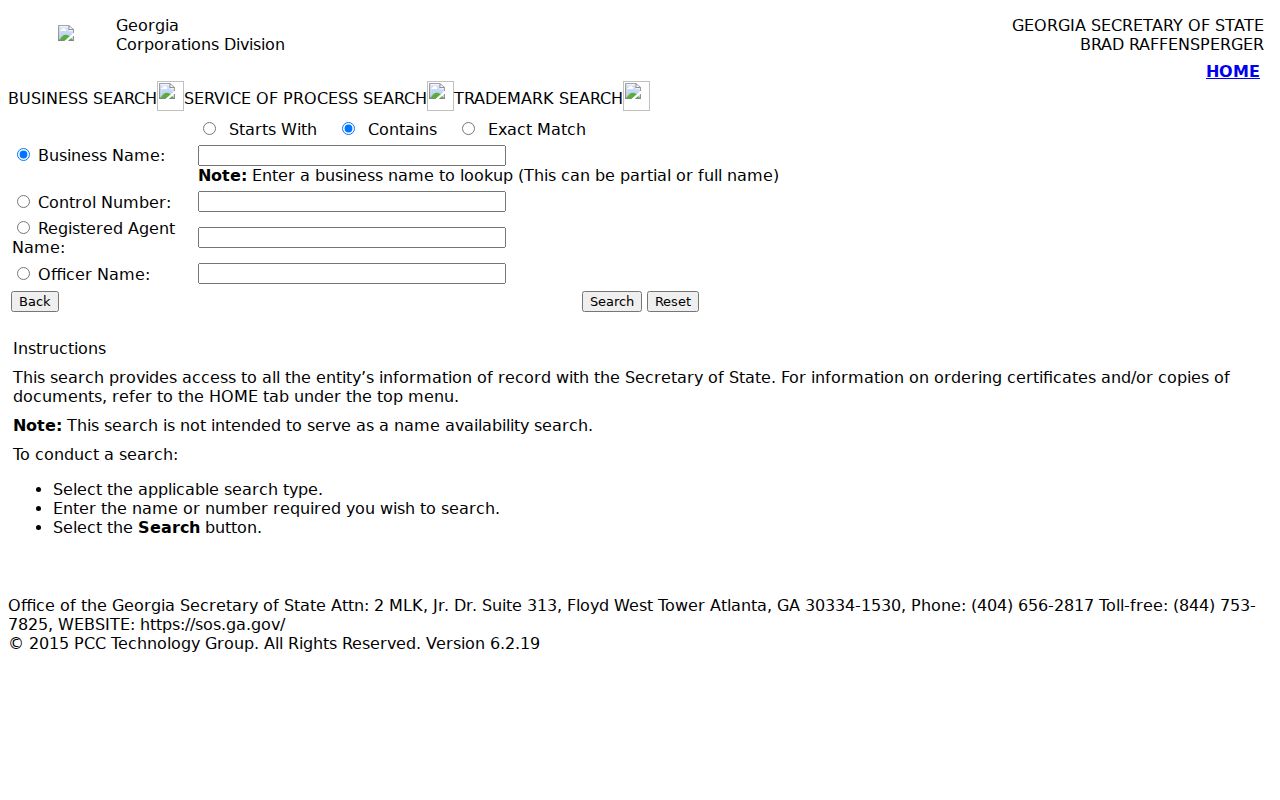
Use entity details only to clarify the recorded party. Then return to the deed to prove the land interest. Trust and estate wording calls for the same restraint. Preserve trustee, executor, administrator, or estate capacity exactly as written. Compare that capacity with the grantee line and legal description in the latest recorded instrument, because an abbreviated tax-roll label may omit detail that the deed itself carries.
Confirm the Lamar County Current Owner
The strongest present-tense check pairs the assessment display with the newest recorded conveyance. GSCCCA supplies the remote index, while the Clerk remains the county recording custodian.
- Search qPublic by exact or shortened address, then save NAME, Situs, PARCEL NO, and the displayed values.
- Open the GSCCCA Real Estate Index, choose Lamar County, and search that name as grantee.
- Sort or narrow by date and compare parcel, land lot, district, subdivision, lot, acreage, or plat references.
- Read the newest deed's filing date, grantor, grantee, deed type, book/page, and legal description.
- If dates conflict, ask the Clerk or Tax Assessor whether the assessment display has refreshed.
- Grantee
- The party receiving the interest stated in the deed.
- Book/page
- A durable reference to the filed instrument in county records.
- Legal description
- The land description used to match the deed to the parcel.
Recent-sale gap. The roll can lag a closing. When the parcel match is sound, the newest recorded deed is the more current ownership evidence.
Use the Lamar County Clerk When Screens Fail
The Clerk of Superior and Juvenile Court records real estate, plats, liens, and UCCs. The office sits at 326 Thomaston Street in Barnesville. It lists weekday hours of 8:00 a.m. to 5:00 p.m. and telephone 770-358-5145. Ask staff to verify the newest deed reference. Ask them to explain access to any image that is gated online.
For assessor-side access, use the county department directory. You can also make a telephone call, or send a focused open-records request. Request an existing parcel record by number and date. Do not ask the agency to build a custom ownership report. Georgia open-records guidance permits requesting an existing electronic format and a fee estimate.
Let a New Deed Beat an Older Lamar Roll
The GSCCCA standards list the index details that make a deed comparison useful: grantor, grantee, instrument type, filed date and time, book, page, general description, land lot, district or GMD, subdivision, unit, lot, block, and cross-references. A live result may use somewhat different labels. Copy what the record actually displays.
A security deed is not the deed that conveys fee title. It secures an obligation and needs a separate search. Likewise, a quitclaim may transfer only the interest its grantor held. The most recent filing matters only after its instrument type and property description match the subject tract.
Note: Use names to find candidates, then use land and filing details to prove that a candidate belongs to the parcel.
Check dates before you assume the assessor is wrong. A deed and a tax roll can disagree. One may simply have refreshed later than the other. Every deed carries an execution date and a later filing date. The qPublic display belongs to a tax cycle. Lamar County has not published that cycle's refresh interval. So keep all three dates, plus the qPublic account number, in your notes. Two questions resolve most conflicts. Ask the Clerk whether a correction, later conveyance, or related instrument follows the deed. Then ask the Tax Assessor which digest or display date governs qPublic. The current owner conclusion then rests on evidence rather than a guessed update schedule.
Entity names deserve the same dated comparison. Search the grantee exactly, punctuation and capacity included. Georgia's business record helps only to separate similarly named entities. A Secretary of State file can list a control number, formation or registration date, status, registered agent, principal office, and filing history. None of that replaces the deed. A registered agent accepts legal process for the entity. That role does not make the agent the owner of record, the occupant, the parcel's manager, or anyone authorized to discuss a sale.
Watch Lamar County Filing Alerts
Lamar County links the Georgia Clerks' free Filing Activity Notification System. Through FANS, email or text notices arrive when property, lien, or plat filings are indexed under a registered name. That flags late changes after a current owner check. An alert is only a lead. Similar names produce false matches. A missed notice never proves that no deed was filed. Open the cited instrument in GSCCCA, or confirm it with the Clerk. Do that before changing any current owner conclusion.
Use Lamar County Current Owner Data Lawfully
The public MAILADDR field serves real parcel business. It does not invite personal profiling. Keep outreach limited, accurate, and tied to a legitimate property concern such as a proposed purchase, boundary question, easement, or estate inquiry. The voter system exists for election administration, and using it to infer ownership in Lamar County is never appropriate.
Lawful use. Public owner data may support legitimate property diligence. It must never be used to harass, intimidate, target, or bypass address-confidentiality protections.
The wider route has its own page. See the Lamar County ownership method for the full address-to-owner approach, since this page only tests whether the assessor name still matches the most recent recorded deed.