
Trace Lamar County Former Owners by Era
Work backward for Lamar County former owners. Start with a confirmed current instrument, then treat each grantor as the next search name. The right starting source shifts with the filing era and what images you can reach online.
| Source | Years It Covers | Where Held | What It Shows |
|---|---|---|---|
| GSCCCA deed index | At least 1999 forward | Statewide online system | Parties, type, date, book/page |
| Clerk deed books | Volume-specific | Clerk counter or copy request | Earlier recorded conveyances |
| GSCCCA Plat Docket | Record-specific | Online system and Clerk | Subdivision, lot, and easements |
| Archive finding aids | Catalog-specific | Georgia Archives | Historic county-record leads |
Go online first for a recent transfer. Once the web index stops, take the last known book and page plus names to the Clerk. A missing web result does not mean the deed never existed in Lamar County records.
Decode Lamar County Prior Owner Fields
Georgia indexing standards set the fields that tie deeds together. For Lamar County property records, those include grantor, grantee, instrument type, and the filed date. Book and page, general description, land lot, district or GMD, subdivision, unit, lot, block, comments, and cross-references round out the entry. General description and land lot also appear. Keep the labels exactly as the result displays them.
- Grantor
- The party conveying the stated interest.
- Grantee
- The party receiving that interest.
- Chain of title
- The linked sequence of instruments affecting the tract.
- Reverse index
- The grantor route used to move backward.
- Legal description
- The land description that keeps the search on the right parcel.
A matching name only gives you a candidate. Filing details and land details decide whether that candidate belongs in a Lamar County deed chain.
Match Lamar County Plats to Past Deeds
The GSCCCA real-property project offers a Plat Docket. You can search it by plat name, county, book and page, or type. Pull the caption first. Then note the filing date, surveyor, lot and block, easements, rights-of-way, and restrictions before you move on. A parcel today rarely matches an old lot after a split, recombination, or replat. Rural tracts call for a different trail: follow the acreage, land lot, district, roads, and metes-and-bounds calls across each deed. Platted land works the same way. Carry the subdivision, unit, lot, block, and plat book and page through every prior owner.
Walk the Lamar County Deed Chain Backward
The GSCCCA Real Estate Index lets you search by party, property, subdivision, book and page, county, date, or instrument. Keep a worksheet for every transfer so the Lamar County deed chain stays orderly as you walk it backward.
- Find the current acquisition deed with the displayed owner as grantee.
- Copy the immediate former owner from the grantor line.
- Search that grantor as grantee in an earlier date range.
- Match description, acreage, parcel clues, and plat.
- Repeat, then continue in Clerk books when online coverage ends.
- Book and page
- The county reference to a filed instrument.
- Cross-reference
- An index pointer to a related or corrected filing.
- Partial interest
- Less than the entire ownership interest in the tract.
Search security deeds on their own track. They secure debt rather than convey fee title, so counting them as transfers distorts the chain. A deed can also move a life estate, a partial share, or part of a larger parent tract, so read its terms before you log the owner.
Ask the Lamar County Clerk for Earlier Books
The Clerk of Superior and Juvenile Court in Barnesville is the keeper of the deed records, plats, liens, and UCC filings for Lamar County. The office sits at 326 Thomaston Street. It keeps weekday hours from 8:00 a.m. to 5:00 p.m., and it takes record requests at 770-358-5145.
Before you call or visit, gather the essentials. Bring the last known book and page. Bring the exact party names, approximate dates, and the land description. Then ask the staff which deed-book index, image service, copy route, or older series carries the chain of title further back. Confirm the current charge for images or certified copies rather than assuming one.
Use Georgia Archives for Lamar County History
Old courthouse material often survives in state collections rather than at the county itself. The Georgia Archives Research Help page is a sensible starting point. The Archives notes that post-1900 county microfilm is generally not comprehensive, though some counties extend later. The catalog governs what can actually be consulted.
For a county-level entry point, the Georgia Archives county-card collection organizes material by county. It can point you toward Lamar County holdings.
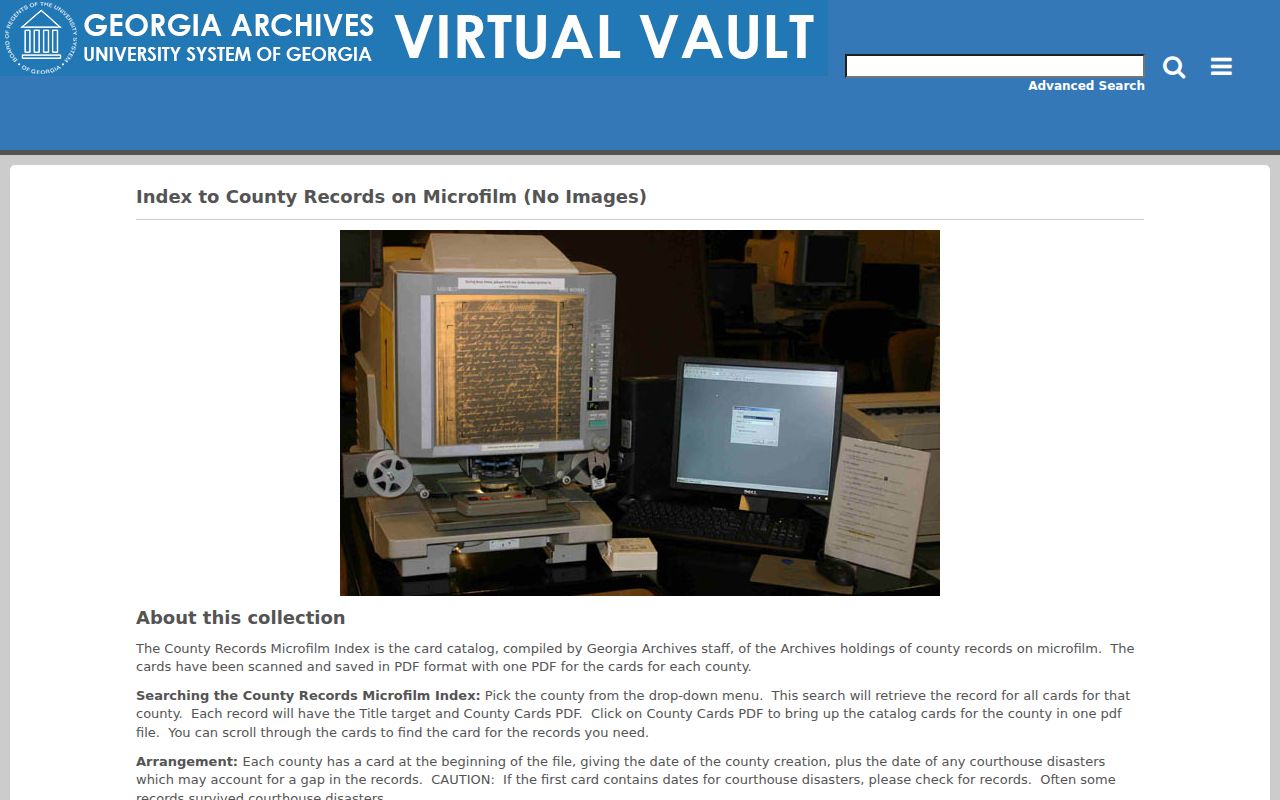
Treat the catalog entry as a planning aid rather than a deed-book citation. It points you toward the next step. Before calling anything a records gap in Lamar County, remember that a missing index hit can trace to spelling, thin indexing, limited service access, or an older volume. The Clerk of Court and the county card should come first.
Note: The local library may have newspapers or family files, but its exact genealogy holdings were not verified in the research.
Test Lamar County Legal Notices as Leads
Georgia Historic Newspapers hosts the Herald-Gazette. It is a Barnesville weekly that has run since 1981. The paper grew out of the Weekly Gazette founded in 1868. Search it using former owner names, roads, subdivisions, foreclosure, tax sale, rezoning, and public hearing. A March 11, 2025 notice shows how much a single item can hold. It cited a 2005 security deed. The notice listed book and page, land lot, acreage, and a courthouse-sale date. Bear in mind that a notice only announces a sale. Confirm the outcome through later deeds, cancellations, or postponements before drawing conclusions.
Carry Lamar County Former Owners Before 1999
GSCCCA confirms statewide deed-index coverage for every Georgia county reaching back at least to January 1, 1999, with older historical entries added over time. Lamar County fits that pattern. The earliest digitized deed image and any complete pre-1999 online coverage remain unestablished.
Online and lawful limits. Treat 1999 as the verified universal online baseline, not Lamar County's first deed year. Use former owner records for property history and diligence, never harassment.
For a handoff older than 1999, carry the last indexed book and page to the Clerk. Then turn to archive aids as the trail demands. Estate transfers add a wrinkle. Probate context may be needed. After that you can circle back to the recorded deed that vested the next owner. The Lamar County deed records page explains obtaining a single deed. This page keeps its focus on the backward sequence.
Resolve Lamar County Name Changes in Old Records
A prior owner of record rarely appears under one clean name. Initials and spelling variants can hide the same person across decades of deed records. Marital names, estate capacities, and business names can do the same. Search each form on its own. Then reconnect the strands through book and page, filing date, and the land description on the deed.
One caution is in order. A registered-agent address pulled from the Georgia business search does not prove the agent owned the land. The grantee named in the deed and the legal description are the real ownership evidence. When an owner simply vanishes from the deed sequence, probate or a court filing often explains why. Georgia Courts eAccess identifies Lamar Superior Court and routes electronic access toward PeachCourt.
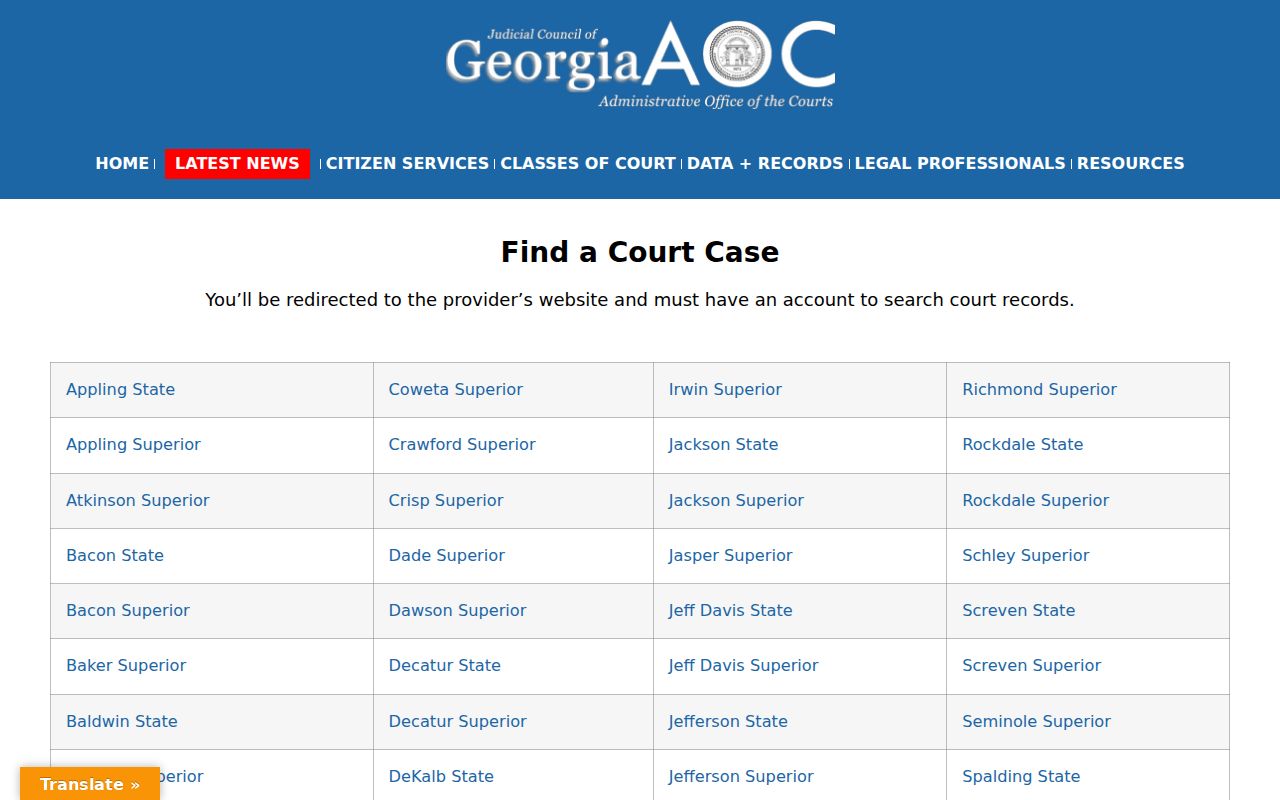
The state directory confirms the court route for a given filing. It does not prove that a case ever transferred this particular parcel, so treat it as a pointer rather than a conclusion. The PeachCourt access screen is where registered users log in to search case records directly.

Old Lamar County records rarely follow tidy name patterns. Some case files need an account. Any clue from a case still has to tie to a recorded instrument and a matching legal description before it counts. Check capacity first. A transfer may name an executor, administrator, estate, or year's-support recipient instead of a plain buyer, so locate the deed that placed the interest in the next owner's name. Never force a tidy sale story onto it. Road names also drift, so search route numbers alongside local names and prefer land lot, district, subdivision, block, acreage, and plat references over a modern mailing label when tracing rural tracts or later-divided land.
Audit the Lamar County Former Owner Worksheet
Test every row before trusting the chain. In a clean Lamar County run, the grantee on one deed becomes the grantor on a later deed. Estates, trusts, partial interests, corrective deeds, and entity conversions can break that pattern. Confirm each instrument touches the same tract. Note any exception language as well. Give execution date and recording date their own worksheet columns, and log instrument type, parties and capacities, book and page, legal description, parcel lead, consideration clue, plat reference, and the source URL or office. Flag rows where no image was available. Never paraphrase unseen language.
A good trail separates facts from leads. An assessor name, newspaper notice, historic directory, or archive catalog can point toward a former owner, but only the filed deed and related legal records establish what interest was conveyed. That discipline keeps the backward chain reproducible for a buyer, heir, historian, or title professional working in Lamar County property records.
Chains branch when owners held undivided shares. Search every grantor and grantee named in the instrument, and preserve the fraction or interest each deed describes. Never collapse several transfers into one owner row. A later deed may convey only one party's share. Estate administration can produce a deed from an executor or administrator, while a trust may act through a named trustee. Record that capacity in the worksheet. That explains why party names differ. Land descriptions branch too. One older deed may cover a parent tract, with its acreage statement, that later became several parcels. Track every exception, reserved tract, and road boundary. Then locate any cited plat or replat. The modern qPublic parcel number works well as a search key but cannot replace the legal description. Work both current and earlier parcel references when a split or recombination appears.
Early land history has its own source. The Georgia Headright and Bounty Land collection spans 1783 through 1909 and holds land grants, plats, and descriptions filmed at the Georgia State Archives. It can offer an origin lead for a district or land-lot chain. It does not bridge to the modern tract, so each old reference must still connect through later deeds and plats before it earns a place in the property's former owner history.