
Inside Lamar County Tax Records
Two offices split the work. The Board of Tax Assessors values each parcel and maintains the assessment roll. The Tax Commissioner sends the bill and takes payment. Keeping those roles apart makes any Lamar County property search easier. The assessor side identifies the parcel, shows value data, and may carry homestead information. The bill side adds the tax year, millage components, amount due, and payment or delinquency status. This applies where the live account allows. County roll entries use labels such as PARCEL NO, Current Value, Previous Value, and Homestead. Match each field to its year.
| Field | What It Shows | Where |
|---|---|---|
| Current and previous value | Two county sample fields useful for year-to-year comparison; their precise basis must be checked on the live card | Lamar qPublic and assessment notice |
| Assessed value | The taxable assessment, generally 40 percent of fair market value under Georgia rules | Assessment notice and tax bill |
| Homestead or other relief | Exemption status and any reduction that applies to taxable value | Assessor record and bill |
| Bill and payment status | Tax year, amount billed, balance, and receipt data when published | Tax Commissioner portal or office |
| Millage components | County, school, city, bond, or other stated levy components | Tax bill and DOR millage records |
No single figure stands in for the rest. Fair market value is the assessor's full-value estimate. Assessed value is the share the tax formula uses. Taxable value can drop once an exemption or special-use rule applies. A recorded sale price proves a transfer happened, nothing more. For a sound Lamar County comparison, write down each field exactly as labeled, with its year and its source.
Lamar County Assessment Fields
The Lamar County qPublic entry point is the assessor's online search route. The county blocks some live access, though. That limit matters. Without seeing the card, no one can promise it shows sale price, deed book and page, acreage, or a particular tax district. A returned-notice file does confirm the local field names used below. Treat those labels as clues. Then save the live result and its date once the search opens.
| Verified label | Use in a tax review | Important limit |
|---|---|---|
| Account No. | Connects a result to a county account | Not a deed reference |
| NAME / MAILADDR | Identifies the roll name and mailing destination | May lag a recent deed |
| PARCEL NO / Situs | Matches the account to a parcel and physical site | Situs may differ from mailing address |
| Current Value / Previous Value | Supports a measured year-to-year comparison | Value basis must be confirmed |
| Digest Class / Desc / Homestead | Preserves classification, description, and YES/NO homestead clues | Do not decode or price an exemption without county guidance |
An assessment-roll record is not a bill. It cannot prove what was paid, when a payment posted, or whether an execution was recorded. Keep the account and parcel numbers close. They bridge directly to the Tax Commissioner search.
Georgia Rules Shape Lamar Taxes
The Georgia Department of Revenue valuation guidance sets real property at 40 percent of fair market value. That is the assessment ratio. Run the arithmetic and a $100,000 fair market value yields a $40,000 assessed value before exemptions. That example is not a Lamar County appraisal. One mill means one dollar per $1,000 of assessed value. Divide assessed value by 1,000. Multiply by total millage, and you have the tax before relief.
Local facts still control the actual bill. Homestead treatment can move the number. So can conservation or agricultural programs, school and county components, bonds, and a city levy. A parcel's postal city does not settle its taxing jurisdiction. Read the bill line by line. Confirm whether the land sits in Barnesville, Milner, Aldora, or unincorporated Lamar County.
The DOR property-tax valuation page carries the full state framework.
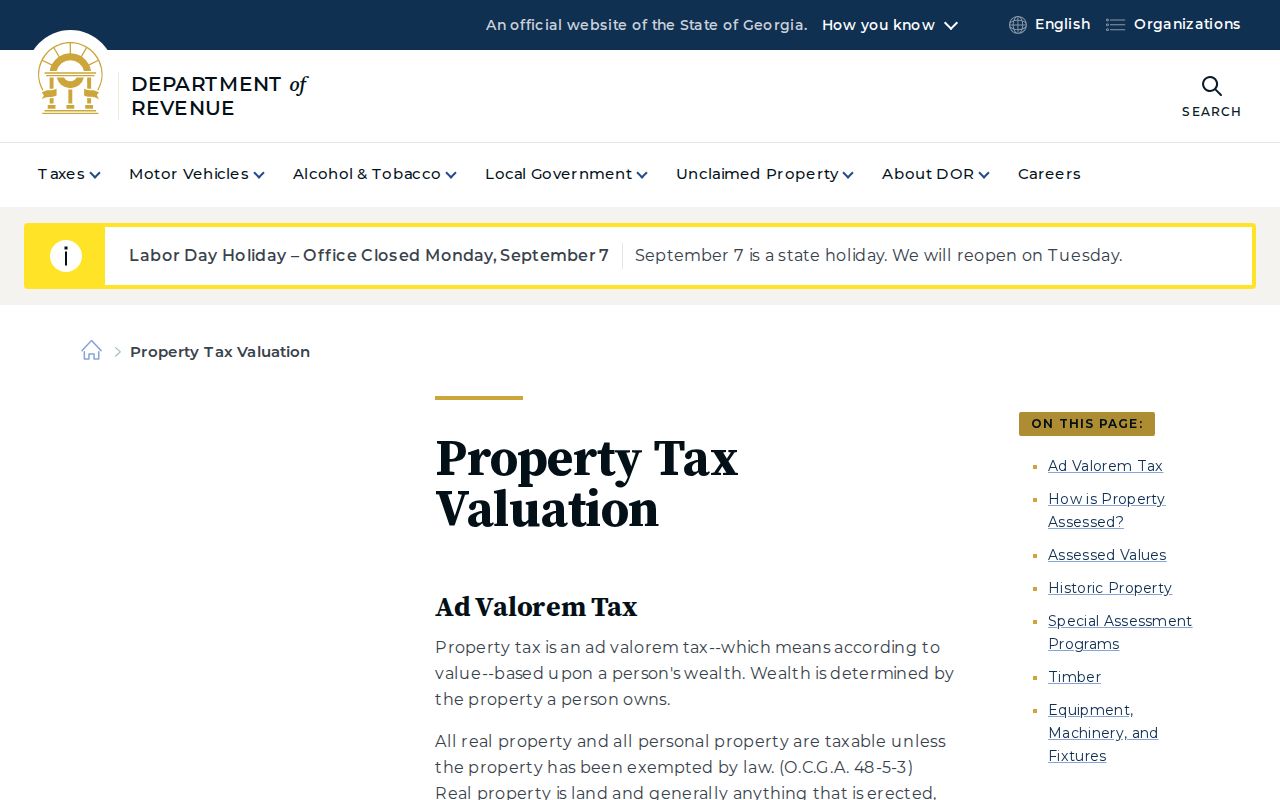
That state source explains the assessment basis. The Lamar County notice and bill still supply each parcel's actual figures.
Note: Never reverse-engineer a sale price from a Lamar County property tax figure; use a deed or PT-61 transfer record instead.
Retrieve a Lamar County Tax Bill
The Lamar County tax site names the Tax Commissioner and links to the online Search & Pay Taxes service. Start with an assessor match, since a misspelled street or a similar owner of record can pull up the wrong account. The payment screen's tax-year selector, historical years, fees, receipts, and payment fields should be confirmed at the time of use.
- Find the parcel in qPublic by situs address, displayed name, parcel number, or map, then copy the account and parcel identifiers exactly.
- Open Search & Pay Taxes and test the parcel or account key. Choose the intended tax year before reading a balance.
- Compare assessed or taxable value and exemptions with the assessment notice. Save the bill date and each component shown.
- Confirm payment, delinquency, receipt, execution, or tax-sale questions with the Tax Commissioner when the online result is silent.
- Assessed value
- The share of fair market value used as the base for taxation.
- Mill rate or levy
- The rate applied per $1,000 of assessed value.
- Homestead exemption
- Relief that may reduce taxable value for an eligible owner-occupied legal residence.
- Tax lien
- A legal claim tied to unpaid taxes; a bill balance alone is not proof of a recorded execution.
Lamar County Tax Portal View
The Tax Commissioner's public landing page lays out the path to account search and payment. View the official Lamar tax page rather than trusting a saved bookmark.

The page names the responsible office and the search route. It does not, by itself, establish any parcel's balance or status. Continue into the selected account and note the tax year.
Lamar County Homestead Timing
Georgia DOR requires an owner to own and occupy the legal residence on January 1. The owner must apply by April 1, or within the assessment-notice appeal window where applicable. The Homestead field on a Lamar County roll shows YES or NO. That flag alone does not reveal the exemption type, amount, or application date. It also shows no denial reason. Ask the Tax Assessor to confirm those details.
Special-use programs need separate care. Conservation, agricultural, forest, and current-use treatment can follow different valuation rules and forms. Land that looks agricultural on a GIS map does not prove qualification. Keep the application, the approval, any covenant period, and each year's notice. Those deed-adjacent documents explain why two similar tracts can carry different taxable values. Their fair market estimates can still sit close.
Contest a Lamar County Assessment
Start with the notice, not the tax bill. That document opens a Lamar County assessment appeal. Georgia DOR lets an owner challenge value, taxability, uniformity, or a denied exemption. File with the Lamar County Board of Tax Assessors. Keep the notice and its envelope too. Hold onto a copy of the filing, proof of delivery, current and prior value records, comparable sales or appraisal support, photographs, and any exemption papers. DOR describes three routes, including the Board of Equalization, a hearing officer, and arbitration, depending on the path and the issue.
Appeal window. File within 45 days of the assessment notice. The notice supplies the actual date, and the PT-311A page provides the state form and filing framework.
Timing decides most appeals. Open the official PT-311A source and confirm the current instructions before filing.
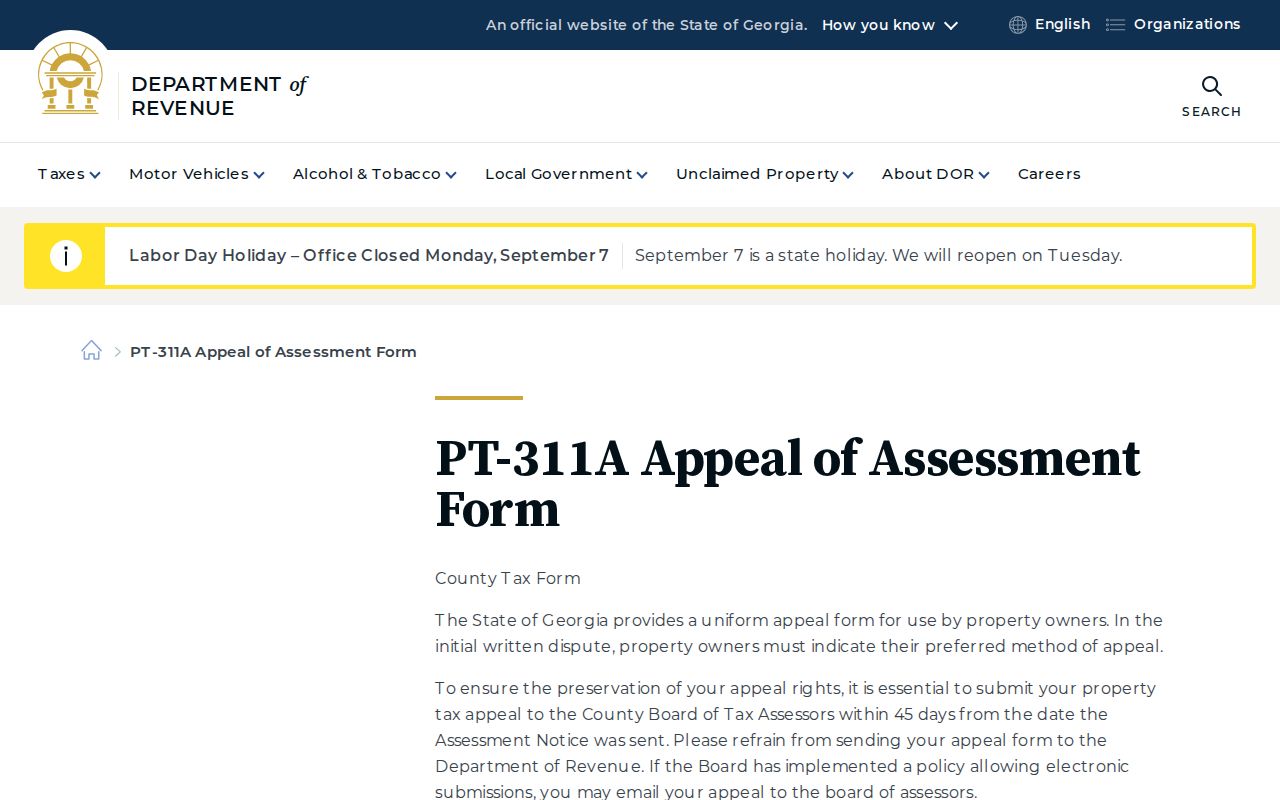
The state page lays out the appeal route. Even so, the local notice controls the filing deadline for one Lamar County parcel.
Lamar County Delinquent Tax Leads
A missed tax bill can trigger collection activity. Several records must stay separate. The account balance is one class of evidence, while a tax execution or lien is another. An advertised sale is only a notice. A later tax deed, redemption, cancellation, or postponement tells what actually happened. The Tax Commissioner and Clerk are the key custodians. The Lamar County Tax Sales page publishes no current parcel docket, bidder rules, minimum bid, or redemption list.

It is a landing page, not a live sale. Check the local legal organ for a published notice. Then confirm the tax year, parcel, owner of record, sale status, and any redemption with the county offices.
Offline Lamar County Tax Access
If a portal blocks access or skips a needed year, call or visit the right office. A missing screen is not a missing record. The Tax Commissioner takes billing, payment, and tax-sale questions. Assessors handle value, parcels, and exemptions. A focused request names the parcel, account, situs, tax years, and the exact records sought. For county files that are not indexed, the Lamar County Open Records Officer accepts requests by email or mail. The county charges ten cents per regular page. Labor charges apply after the first 15 minutes at the lowest paid qualified employee rate. Georgia agencies generally owe records within three business days. When that is not practicable, they must give a written schedule, cost estimate, and exemption basis.
Note: Ask for existing electronic files and a fee estimate; an agency is not required to create a new tax report.